 fig.1
fig.1The fact that ancient Roman artists created highly sophisticated conceptual juxtapositions between the physical wall and its simulacra as an effective means of profound communication, seems almost too absurd to contemplate in an age saturated by sophisticated forms of computer-generated imagery (CGI). In ancient Rome, however, in both public and private places, wall-painting was used as a means of profound communication. It provided a primary surface upon which to leave one's mark, both in a localised sense and for posterity. Whilst the numerous political campaign slogans plastered on walls had a short shelf life and graffiti was used to either solicit or insult, other forms of wall inscriptions, paintings and depictions were designed for posterity. For example, epigraphic inscriptions were predicated upon the wall outlasting its author and In the case of Pompeii this proved to be a prophetic reality. Inscriptions such as all you who pass by remember me, for I was once like you, are still powerful evocations of a life once lived, as well as a chilling reminder of our own mortality. Instead of words, wall-paintings memorialised and commemorated via sophisticated pictorial compositions that were designed to facilitate communion with metaphysical worlds.
In 1865 Fustel de Coulanges, uncontaminated by the modern filters that distort our understanding of Roman wall-painting today, perceptively summarised the concept of the Roman house as a sanctuary. His summary highlights many of the religious imperatives that encouraged the creation of false-doors in domestic interiors.
“His house is for him what a church is for us; there he finds his worship and his gods. His hearth is a god; the walls, the doors, the thresholds are gods; the posts which mark off his fields are gods. The tomb is an altar, and his ancestors are divine beings. Each of his daily actions is a rite.
Birth, initiation, the assumption of the toga, marriage, and the anniversaries of all these events are the solemn acts of his worship [...]
He makes sacrifices every day in his house, every month in his curia, and several times a year in his gens or his tribe. In addition to all these gods, he owes worship to those of the city. In Rome there are more gods than citizens.”



associated with conquering death. Therefore, in this context the door acts as a symbolic exit from the physical world and at the same time an entrance to Elysium.
The presence of votive images placed in front of false-doors, both pictorial and sculptural, reverses this dynamic, because they exemplify the desire to reengage with the souls of the departed. Therefore, as an exit from this world the false-door implies tragedy and loss, whilst conversely, as an entrance profusely decorated with votive and immortality symbols, it provide catharsis for the living.
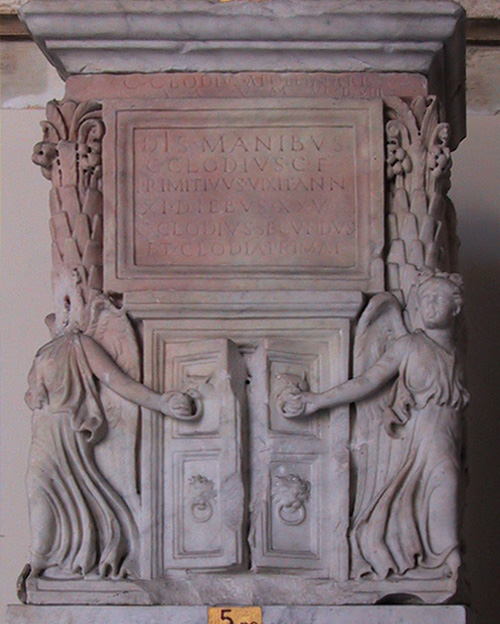
Fig.1 encapsulates the underlying ambiguity associated with the image of the false-door. Is it an exit or an entrance? Is the tomb door opening so that the souls of the dead may enter and achieve immortality or is it being opened in order to release their immortal souls amongst the living? The associated eschatological imagery can be used to argue for both of these propositions and therefore it is more likely that the false-door was always intended to have a dual function.
The phoenix dactylifera palms placed either side of the entrance (fig.1) are ubiquitous immortality symbols because, as their name suggests, they appear to whither and die and then rejuvenate. The winged Victories and the lion door handles are also symbols
|