 4>
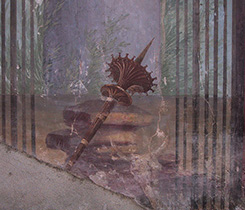
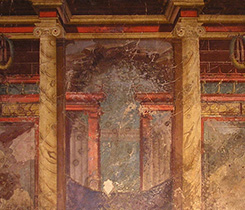
4>The overlap between scenery painting and domestic wall-painting is more likely to have occurred due to the probability that the same painters were commissioned to carry out both activities. Their highly developed understanding of linear and atmospheric perspective, along with a sophisticated understanding of what we now call gestalt psychology, may well have resulted in commissions that provided these artists with an opportunity to create a symbiotic overlap between theatre and house as theatre. The result was not merely a facsimile of stage scenery within the house, but something far more surprising. They went beyond the simple laws that govern pictorial perspective in scenery painting and created three-dimensional virtual worlds that were so sophisticated that they not only fooled the birds, as Pliny recounts in relation to verisimilitude in stage scenery painting (Pliny the Elder, Nat. Hist. 35.23), but enabled the household to live in a space that encouraged them to move seamlessly between physical and metaphysical worlds (figs.1-5).
4>


 1>
1>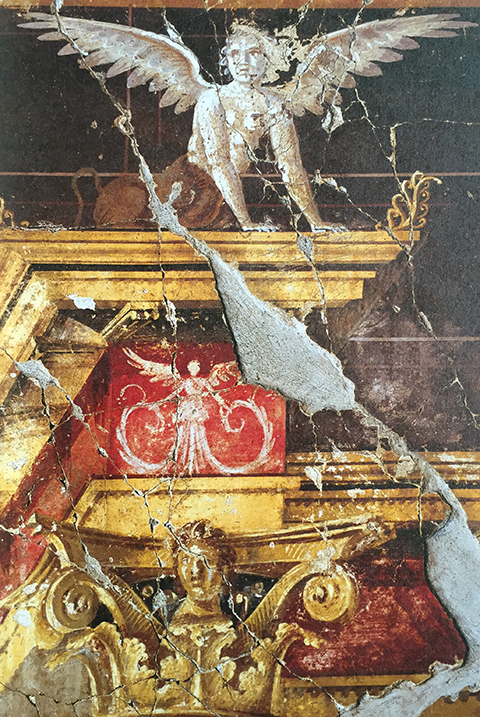 5
5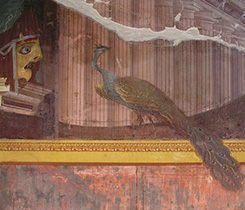 3>
3>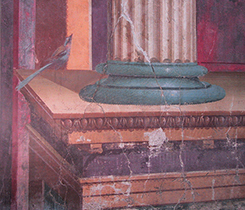 2>
2>
|